The role of the integumentary system in protection layers of keratinized cells abrasion protection water resistant.
View Free Nerve Ending Integumentary System Gif. Free nerve endings are the most abundant type of nerve endings. Its main function is to act as a barrier to protect the body from the the integumentary system has many functions, most of which are involved in protecting you and regulating your body's internal functions in a variety of ways
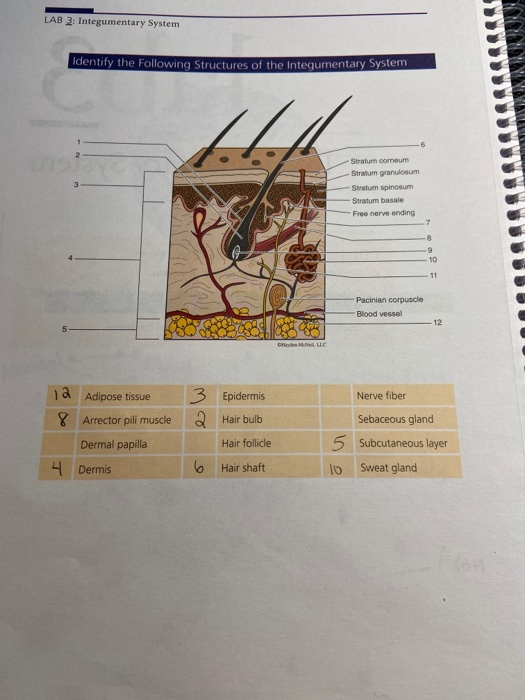
Solved Lab 3 Integumentary System Identify The Following Chegg Com from media.cheggcdn.com
Skin and its appendages are part of integumentary system where specialised sensory nerve ends are present. The integumentary system consists of the skin, hair, nails, glands, and nerves. Free nerve endings are simply free dendrites at the end of a neuron that extend into a tissue.
The integumentary system is one of the major systems of the body, and the skin is the largest organ of the body.
Afferent in this case means bringing information from the body's periphery toward the brain. Skin and its appendages are part of integumentary system where specialised sensory nerve ends are present. The skin not only keeps most harmful substances out, but also. O explain the significance of synapses in the nervous system.
View Free Nerve Ending Integumentary System Gif
Nerve end, nerve endinghyper. free nerve endings are unencapsulated and have no complex sensory structures, unlike those found in meissner's or pacinian corpuscles. Powtoon is a free tool that allows you to develop cool animated clips and animated presentations for your website, office meeting, sales pitch, nonprofit fundraiser, product launch, video resume, or anything else you could. Other articles where free nerve ending is discussed: They lie near blood vessels between epithelial layers of the skin, the cornea, the alimentary tract, and in connective tissues. To know the histological features of pacinian and meissner corpuscles and free nerve endings. In joints, they are found between the synovial and fibrous layers, and within the fibrous layer itself.