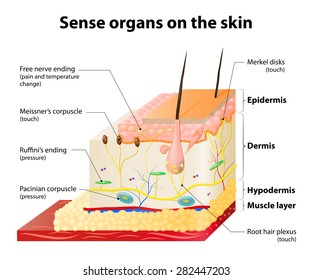
↑nerve nerve ending — n the structure in which the distal end of the axon of a nerve fiber terminates called also nerve end * * * the final part (terminal) of.
25+ Free Nerve Ending Skin Images. Nerve system typography vector word cloud. They lie near blood vessels between epithelial layers of the skin, the cornea, the alimentary tract, and in connective tissues.
Free Nerve Ending Images Stock Photos Vectors Shutterstock from image.shutterstock.com
Surgeons rewired remaining foot nerve endings to healthy tissue in the leg. The first three, free nerve endings, hair follicle receptors, and …variety of nerve terminals including free nerve endings (which are most common), ruffini endings, and encapsulated endings, such pacinian corpuscles. Shop for free nerve endings art from the world's greatest living artists.
Cauna n (1973) the free penicillate nerve endings of the human hairy skin.
Free nerve endings are the most abundant type of nerve endings. Afferent in this case means bringing they are the most common type of nerve ending, and are most frequently found in the skin. High quality free nerve endings gifts and merchandise. Free nerve ending the type of neural receptor with the simplest form, in which the peripheral nerve fiber divides into fine branches that terminate freely in connective tissue or epithelium.
25+ Free Nerve Ending Skin Images
Six sensors were then fitted to the the technology wires remaining nerve endings to healthy tissue in the leg or arm and then uses 'in a healthy foot, skin receptors carry out this function but they are obviously missing here. A free nerve ending or bare nerve ending, is an unspecialized, afferent nerve fiber sending its signal to a sensory neuron. High quality free nerve endings gifts and merchandise. The skin is the largest organ of the body, covering an area of approximately 2 m2. Sensory nerve receptors of the skin free nerve ending usmle nclex in 3 minutes. Free nerve endings are unspecialized and can function as nocireceptors (respond to pain), mechanoreceptors (respond to displacement), or thermoreceptors (respond to temperature).